Fullbore Target Rifle (including Service Rifle)
|
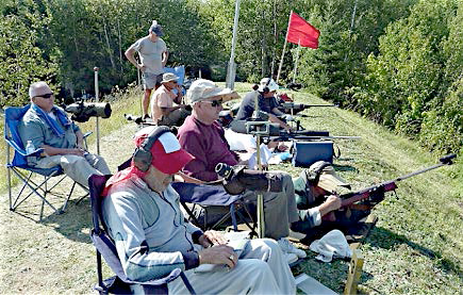
Centre-fire (fullbore) target rifles and Service Rifle usually fire .308 Winchester, .223 Remington however, other calibers may be used in specific categories. Rifle shooting stresses not only marksmanship, but reading environmental conditions as well. Fullbore target shooting can lead a competitor to Bisley England for the NRA (UK) championships, the Commonwealth Games or to the world long range championship Palma Matches and F-Class Championships. Target rifles are fitted with adjustable target sights and may be fitted with a shooting sling, F-Class rifles are fitted with Optical sights and rests or bi-pods. Service Conditions Rifle has a focus on practical marksmanship from differing shooting stances like prone, sitting, kneeling, and standing where a participant uses heavy barreled hunting and precision rifles to compete. A new addition to the rifle shooting sports becoming popular is Precision Rifle Shooting (PRS). The sport is rooted in real-world hunting and shooting to challenge shooters on a practical level using rifles fitted with optics.
|
Handgun
|
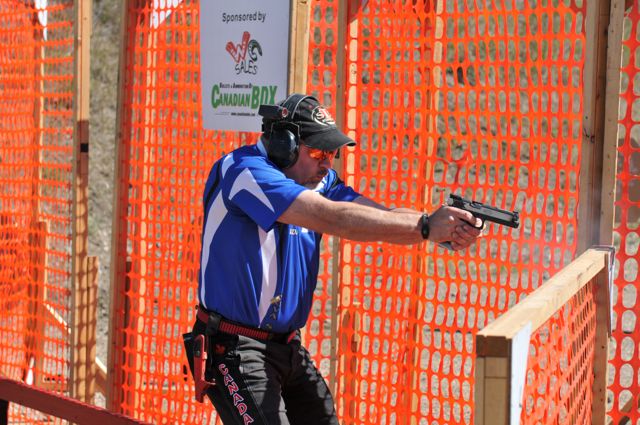
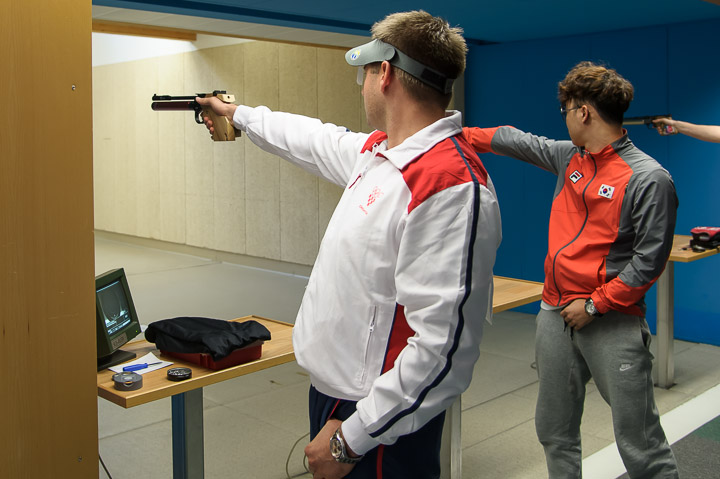
International Shooting Sport Federation (ISSF) is the governing body of Olympic and World Championship Handgun competitions. Using .22 caliber (some .32 cal.) pistols ISSF shooting disciplines can be both static and dynamic focusing on both accuracy and speed. There are matches province wide in Air Pistol, 50m Pistol, Standard Pistol, and Rapid-Fire. Air Pistol and Rapid fire are the men’s Olympic pistol sports with Air Pistol and 25m Pistol the women’s Olympic pistol sports. ISSF matches are all shot using only one hand with the guns lowered at a 45-degree angle until the ‘Fire’ command is given. All ISSF pistol events use ‘open-sights’, no scopes or red-dot sights are allowed. Individuals interested in ISSF Pistol Shooting start training with Air Pistol and if they are progressing and training, can be issued an exemption letter from the SFNS to buy a .22 Cal handgun to practice and compete in the ISSF disciplines. Exemption letters are issued by the SFNS on a case by case basis pending an evaluation of each individual shooter.
There is also recreational pistol shooting events and matches around the province using rimfire and centerfire pistols in, PPC, IPSC, Cowboy Mounted Shooting (on Horseback) and Cowboy Action. Standard Pistol: Shot with a .22 Handgun, this sport is the most common ISSF Pistol competition, shot world wide in National and Common Wealth events. It combines both precision and speed for total score so these scores are a good representation of a competitor’s ‘over-all’ abilities with a pistol. It is composed of 12 individual strings of 5 shots at 25m targets (reduced 20yd targets available). Each shot is worth 10 points for a total of 600 possible points. Slow fire- 4 strings of 5 shots, each individual string in 150 seconds Timed fire- 4 strings of 5 shots, each individual string in 20 seconds Rapid fire- 4 strings of 5 shots, each individual string in 10 seconds (Current record 584/600) Rapid Fire Pistol: Is shot with a .22 Handgun world wide in National, Common Wealth and Olympic events. Rapid is very fast precision shooting. It is composed of 12 individual strings of 5 shots at 5 targets 25m away (reduced 20yd targets available). Each shot is worth 10 points for a total of 600 possible points. The top 6 competitors in matches go to finals; only 4 second strings are used in finals with only 9.6 or higher counted for score and recorded as a ‘hit’. The athlete with the most ‘hits’ win. Slow fire- 4 strings of 5 shots at 5 targets, each individual string in 8 seconds Timed fire- 4 strings of 5 shots at 5 targets, each individual string in 6 seconds Rapid fire- 4 strings of 5 shots at 5 targets, each individual string in 4 seconds (Current record 593/600) 50m Pistol: Commonly called ‘free-pistol’ because there are few rules governing the guns used. It is shot with a .22 Handgun, with open pistol sights and the trigger is pulled with the hand holding the gun, those are the rules. It is one of the oldest pistol shooting sports and involves great precision, shot at a 25m pistol target placed 50meters away. 60 shots are fired over the course of 2 hours, 10 points per shot maximum. It is no longer an Olympic sport (after Rio 2016) but is shot world wide in National and Common Wealth events. Slow fire- 60 shots in 2 hours (Current record 581/600) Center Fire: 25 m Center-fire Pistol is an ISSF, shooting event for males based on military/police style, shooting. This event is not in the Olympic Games, but is part of the ISSF world championships and CISM world championships. (Current record 593/600) 25m Pistol (formally sport pistol): is the women’s equivalent of this event, and is shot in the Olympics using .22 calibre pistols. (Current record 592/600) A match is composed of two parts, each 30 shots, scores are added together for a total of 60 shots 10 points per shot maximum Slow fire (Precision stage)- 3 strings of 5 shots each in 5 minutes on a standard 25 m pistol targets Rapid fire- 3 strings of 5 shots each shot in 3 seconds on a 25m Rapid-Fire Pistol Target (Current record 593/600) The match is then repeated a second time for a total of 60 shots |
Shotgun
|
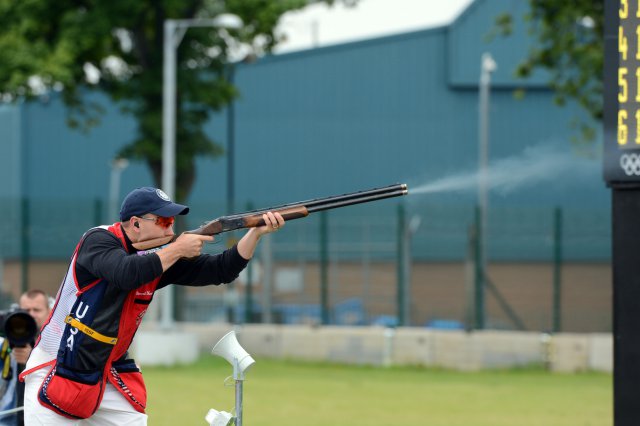
Shotgun disciplines include Trap, Skeet, and Sporting Clays, all of which involve shooting at flying clay disks called ‘birds’ or ‘clay pigeons’ of various sizes traveling at speeds of 60 to 100km/hr. These sports have a very large following in Nova Scotia, with competitions taking place most weekends throughout the year.
Trap Shooting: involves shooting at clay targets thrown from one or more trap machines located at approximately ground level, 10 - 15m in front of the competitor. The clays are thrown away from the firing point at varying speeds, angles and elevations as single clays or doubles (2 clays at a time). Competitors shoot 25 shots from 5 positions. Trap Shooting is an Olympic Sport. Skeet Shooting: clay targets are also thrown, both single and doubles from 2 skeet houses on either side of a field 40 metres apart. The left skeet house (High House) launches clay targets several meters above the ground, towards the left of field center and the right skeet house (Low House) launches clay targets from 1 meter above the ground towards the right of center field. Shooters follow an arc from the high house to the low house on which there are 7 shooting positions with the 8th position in the center of the field. The clay targets are thrown at fixed trajectories and speeds as the shooter moves around the arc in the field. Competitors shoot 25 shots from 8 positions. Skeet Shooting is an Olympic Sport. Sporting Clays: is comparable to playing golf using a shotgun instead of a club; there is no predictability like in Trap and Skeet Shooting as each course is different. Courses follow the natural terrain in the area, with the clay targets launched in varying elevations, trajectories, angles, speeds and distances. Competitors shoot 25 shots from 8 to 15 positions. 5 Stand- is a variation of the other shotgun events with 5 clay targets shot from 5 different positions with targets launched from 6 to 18 different, strategically placed launchers. Competitors shoot 25 shots. |
Smallbore Target Rifle
|
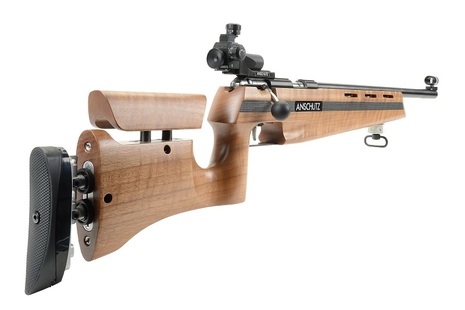
Smallbore target rifles are regularly shot throughout the province, indoors and out, winter and summer. Smallbore Rifle matches are part of the Olympic and Commonwealth Games. They are .22 Long Rifle caliber and shot in the categories listed below. Match Rifle: these are the rifles used at the Olympics, sometimes called Standard Rifle. These are match grade rifles with stocks that are full adjustable to the shooter and changed to be most comfortable in each shooting position. They are fired from three positions; prone, standing, and kneeling at bullseye targets. Match rifles are fitted with adjustable, aperture (peep) target sights and with slings to increase steadiness for accurate shooting. Sporting Rifle: uses target style rifles similar to Match rifles and is shot only in Canada. The stocks on these rifles are not adjustable, they are fired from three positions; prone, standing, and kneeling at bullseye targets. Sporting Rifles are fitted with adjustable, aperture (peep) target sights and DO NOT use slings or any other form of support. Practical Rifle: can be any .22 rifle which is not a target rifle and is shot at bullseye targets. This category was formerly called Hunting Rifle because stock Ruger, Savage, Tikka, ect. hunting rifles are used. Any action and any type of sights including scopes can be used – most .22's rifles fall in this category. F-Class: shooting is wide open with regards to rifle choices, with scope sights, bipods, and rear bags all permitted. All F-Class shooting takes place in the prone position at bullseye targets. There is a ‘Budget Division’ in Nova Scotia designed for starting competitors, so rifles with 2lb or heaver trigger pulls, weigh less than 8.5 lbs and have scopes with a maximum of 12 power are used; most .22 hunting rifles can be shot in this category. Biathlon: uses .22 bolt action rifles, in combination with running/skiing and shooting. Biathlon has a strong following in the province, especially with cadets and is an Olympic and Commonwealth Sport. Most training in the province is done at the NSRA (Metro in Sydney is currently building a range) with large events held in Miramichi and Charlo N.B. and in Brookvale P.E.I. with training regularly at NSRA. Precision Rimfire Rifle Shooting (PRS .22): is a new addition to the Smallbore rifle shooting sports and is quickly becoming popular with Canada placing third at the world championships in August 2025. The sport is rooted in real-world hunting scenarios, shooting steel targets from various positions to challenge shooters on a practical level. There are divisions and categories to include any .22 rifle. Growing Popularity: With the growing popularity of .22 rifle shooting the SFNS has designed a coaching/shooting program to introduce new and augment experienced shooters to the fundamentals of firing an accurate shot. Information is available under the ‘General Information’ Section. |
Air Gun
|
Airguns are available as pistols and rifles. They usually fire .177 or .22 caliber lead pellets and use compressed air or CO2 to propel the pellet. Airgun target shooting is a demanding sport which stresses precision marksmanship, concentration and physical and mental conditioning and can lead a competitor to the Olympics, Commonwealth Games. These competitions are generally all shot at a distance of 10m in the standing position. The air pistol is shot one handed. Air rifles are used by the Army, Air and Sea Cadets. Air pistols are used by Pony Clubs in their Tetrathlon events. Airgun shooting is a relatively inexpensive training tool as well used by rifle and pistol athletes during the winter months to augment their marksman ship skills.
Individuals interested in ISSF Pistol Shooting start training with Air Pistol and if they are progressing and training can be issued an exemption letter from the SFNS to buy a .22 Cal handgun to practice and compete in the ISSF disciplines. Exemption letters are issued by the SFNS on a case by case basis pending an evaluation of each individual shooter. |
Black Powder
|
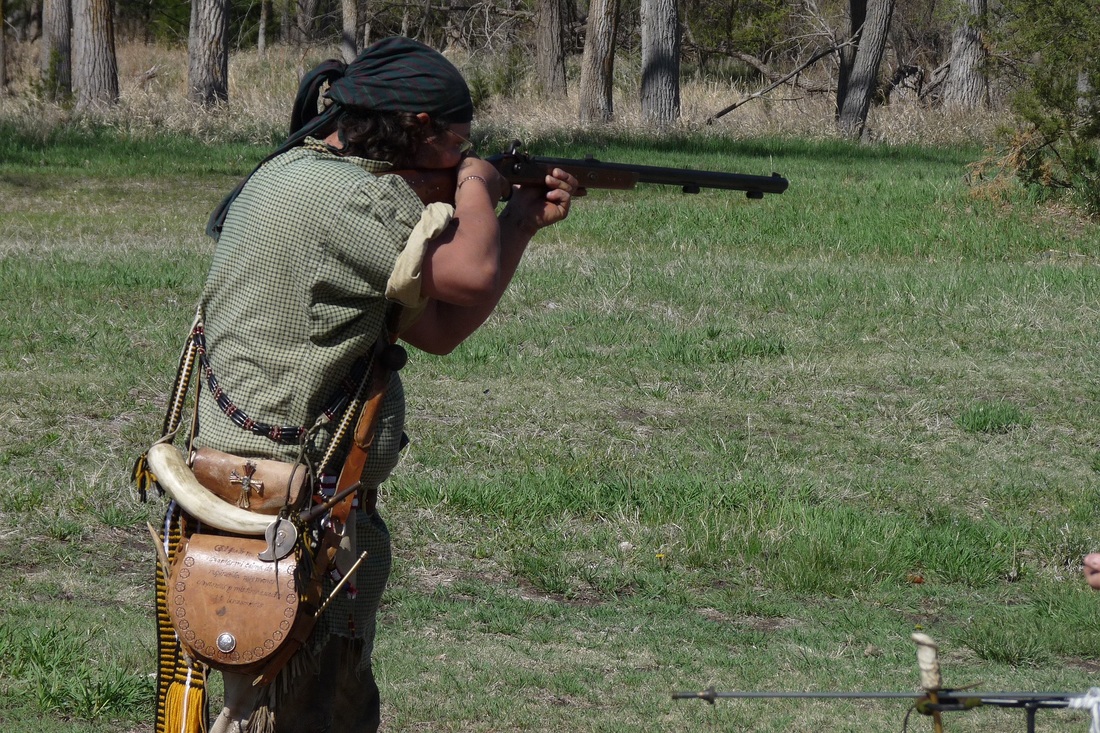
Black Powder refers to those shooting sports that use antique firearms (or replicas) loaded with ‘Black-Powder’ rather than modern smokeless powder firearms. These are frequently single-shot firearms except for the more modern antiques that operate via ‘cap and ball’ or metallic cartridges which can be found as manually repeating pistols and rifles. Black powder firearms produce a cloud of smoke when discharged, obscuring the target, and providing an ambiance reminiscent of historical times which is attracting a growing interest. Many Nova Scotian clubs have ‘Black Powder’ only competitions and there are ‘World Black Powder Competitions’ every 4 years like the Olympics and Nova Scotia has athletes that have won Gold.
|
Coaching
|
Coaching is the regimented process of training or teaching a learner to achieve specific personal or professional goal.
The SFNS supports shooting sport coaches through professional development opportunities and coaching courses. For more information please check out our Coaching Page here. |